
Home Experiences
The experiences
Step inside. Stay as long as you like.
These are 360 virtual tours of Cades Cove and the Great Smoky Mountains: not slideshows of a place, but ways of standing in one. Every one of these 360 virtual tours is built to be explored with a keyboard, read by a screen reader, described aloud, and taken at whatever pace suits you.
The cove
Four stops now. Twelve to come.
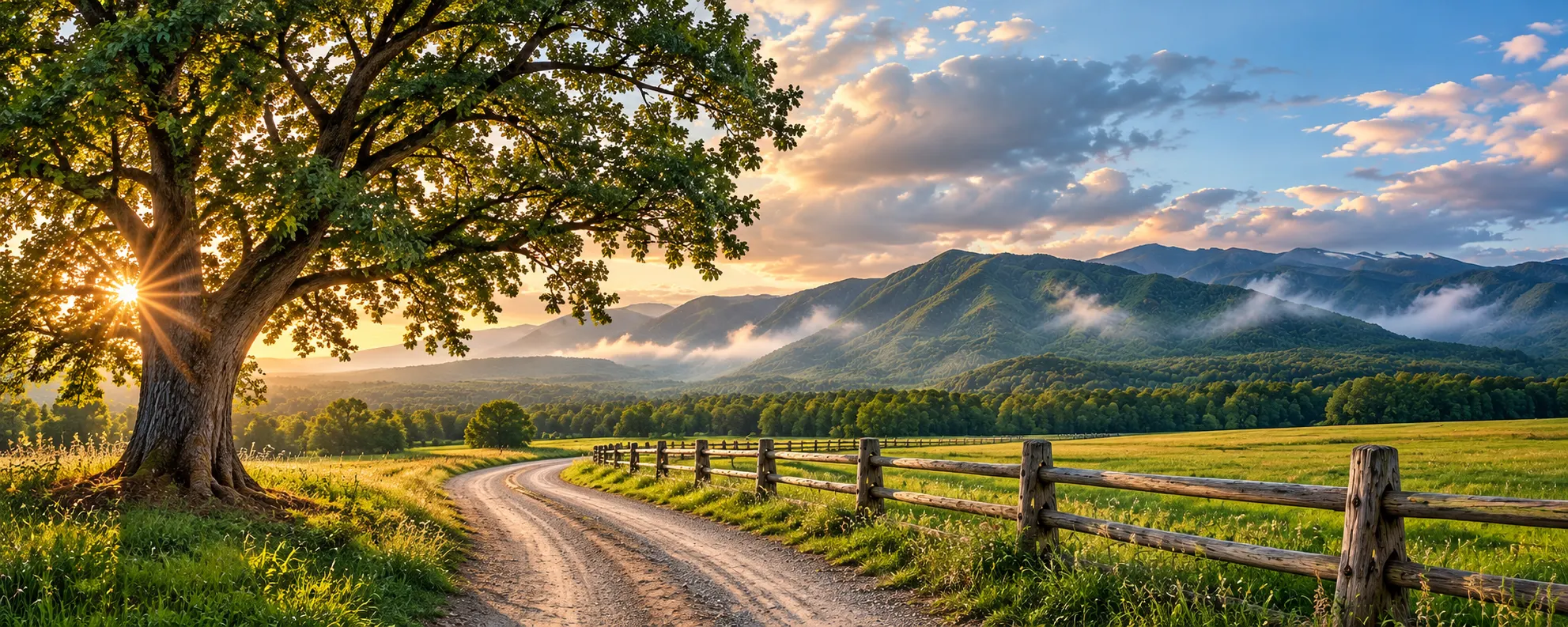
Cades Cove is an eleven-mile loop through a valley on the National Register of Historic Places, inside a park that is both a World Heritage Site and an International Biosphere Reserve. We are documenting it one structure at a time.
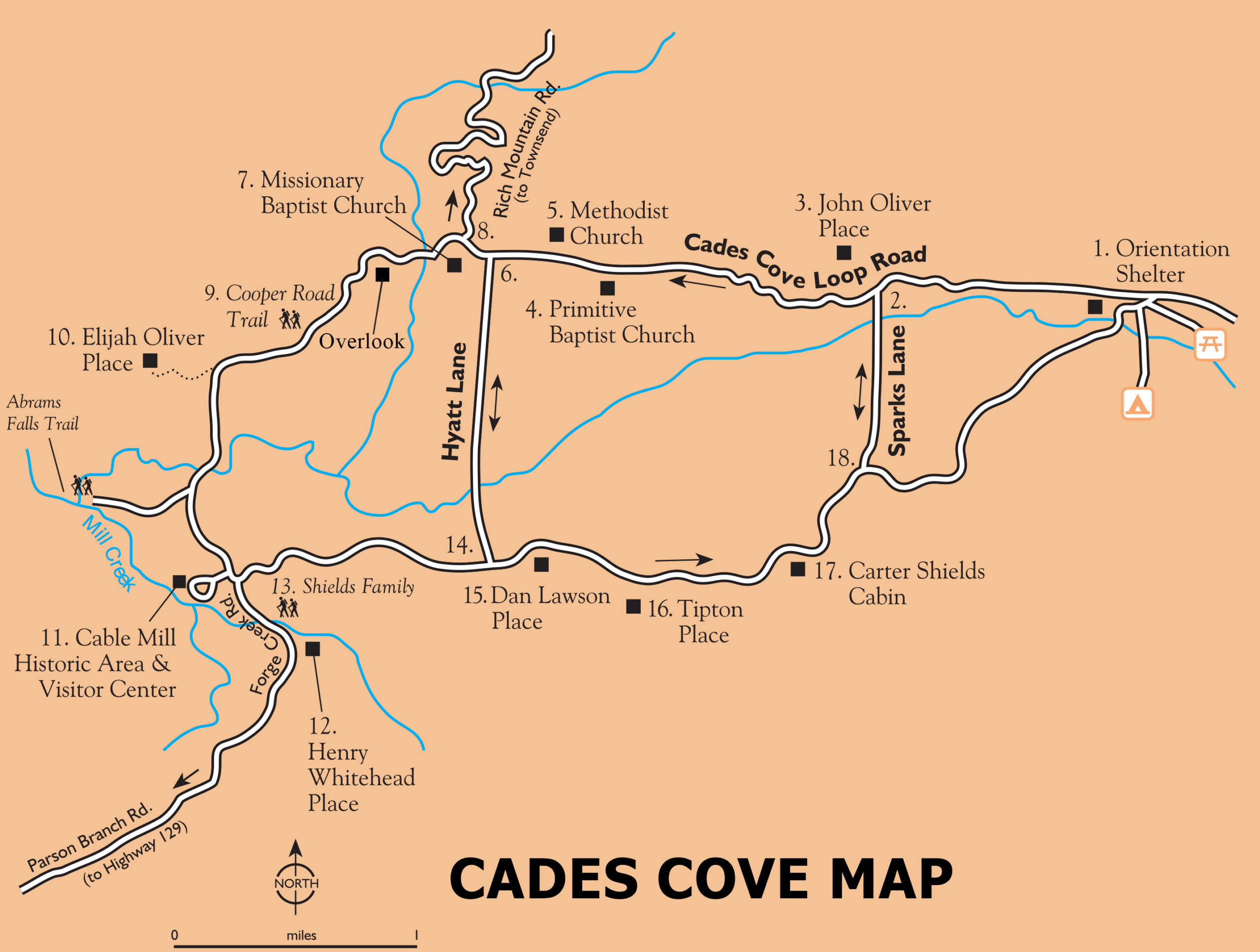
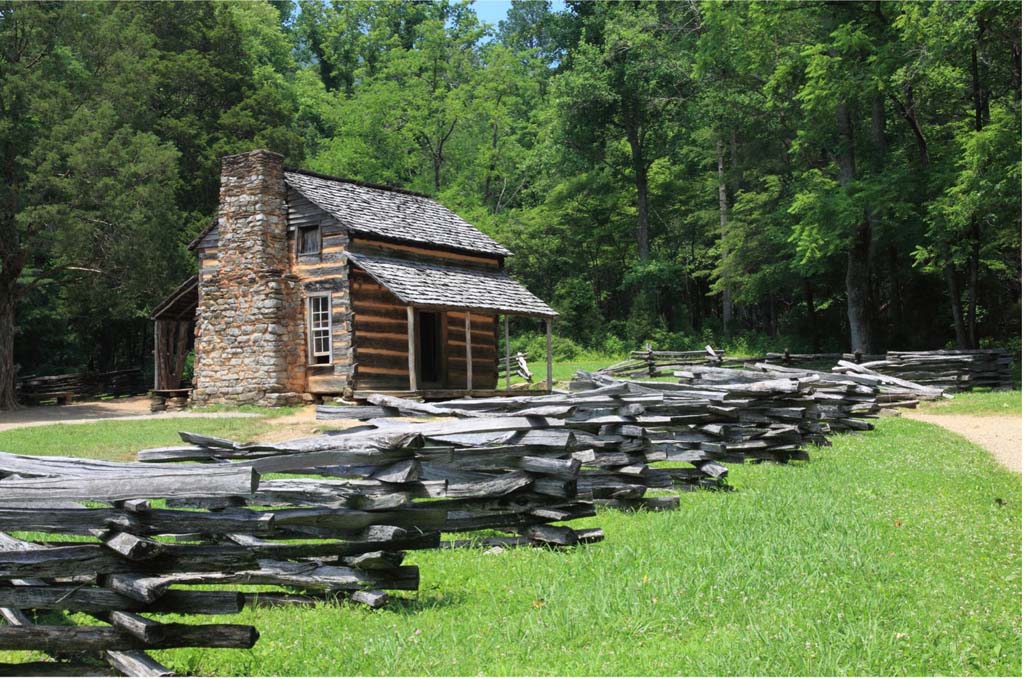
- 1John Oliver CabinMap no. 3 · The oldest log home in the park
- 2Primitive Baptist ChurchMap no. 4 · 1827, and the oldest cemetery in the cove
- 3The OverlookMarked Overlook · Where the shape of the valley makes sense
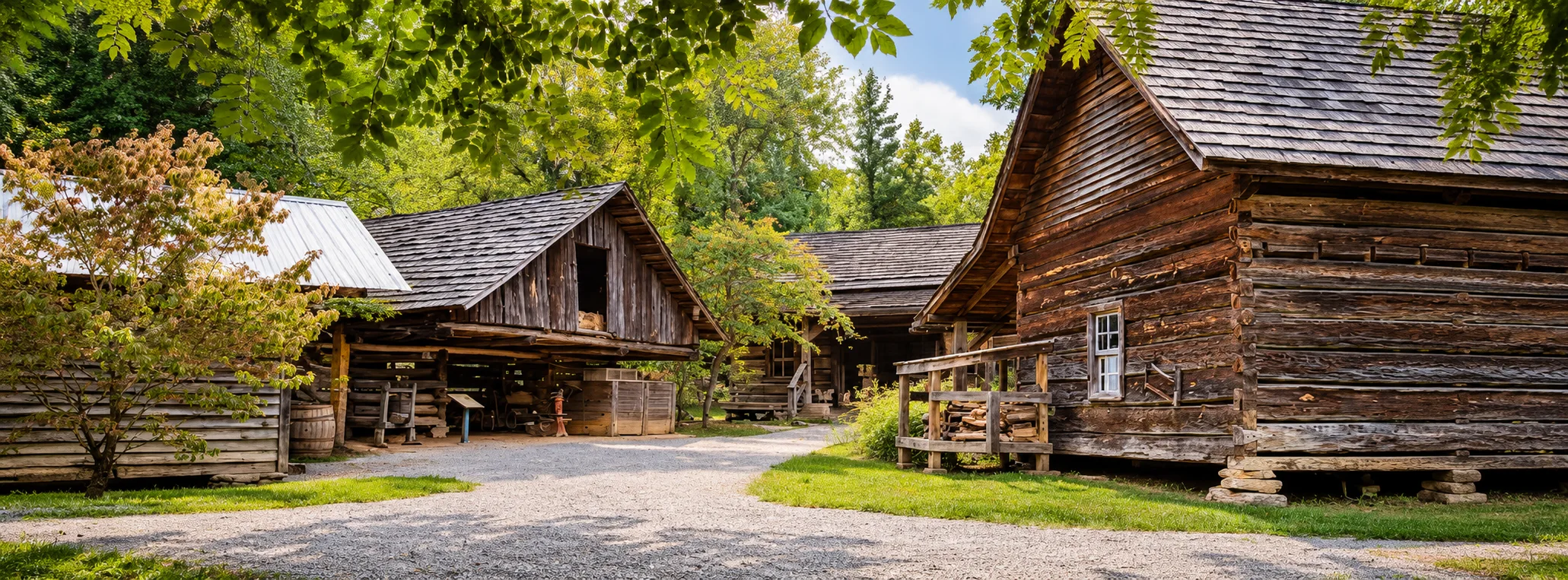
- 4Cable Mill AreaMap no. 11 · A working gristmill and the buildings around it
Twelve structures are planned in all, each one filled with 360° imagery, audio description, oral history and archival material. The four above come first because the National Park Service permit covers them.
Getting the most out of a 360 virtual tour
Move around
Click and drag to look in any direction. On a phone or tablet, drag with one finger. Pinch or scroll to zoom in on detail.
Without a mouse
Press Tab to move between hotspots and Enter to open one. Esc closes it again.
Make it bigger
Every experience opens full screen from the control in its bottom corner, and your browser's zoom works throughout.
If motion bothers you
Nothing starts on its own. Each one opens only when you choose to. Move slowly, or use the described transcript instead.
 360° virtual tour · Cades Cove
Enter the tour
Loads only when you choose to enter
Listen before you enter
Each part plays on its own. Start with the first, then choose the ones you want. Nothing plays until you press play.
-
1Outside the cabin
9 min 14 s · 6.7 MB
-
2Log construction
6 min 13 s · 4.5 MB
-
3Inside: the hearth
5 min 36 s · 4.0 MB
A written transcript of this narration is on the way.
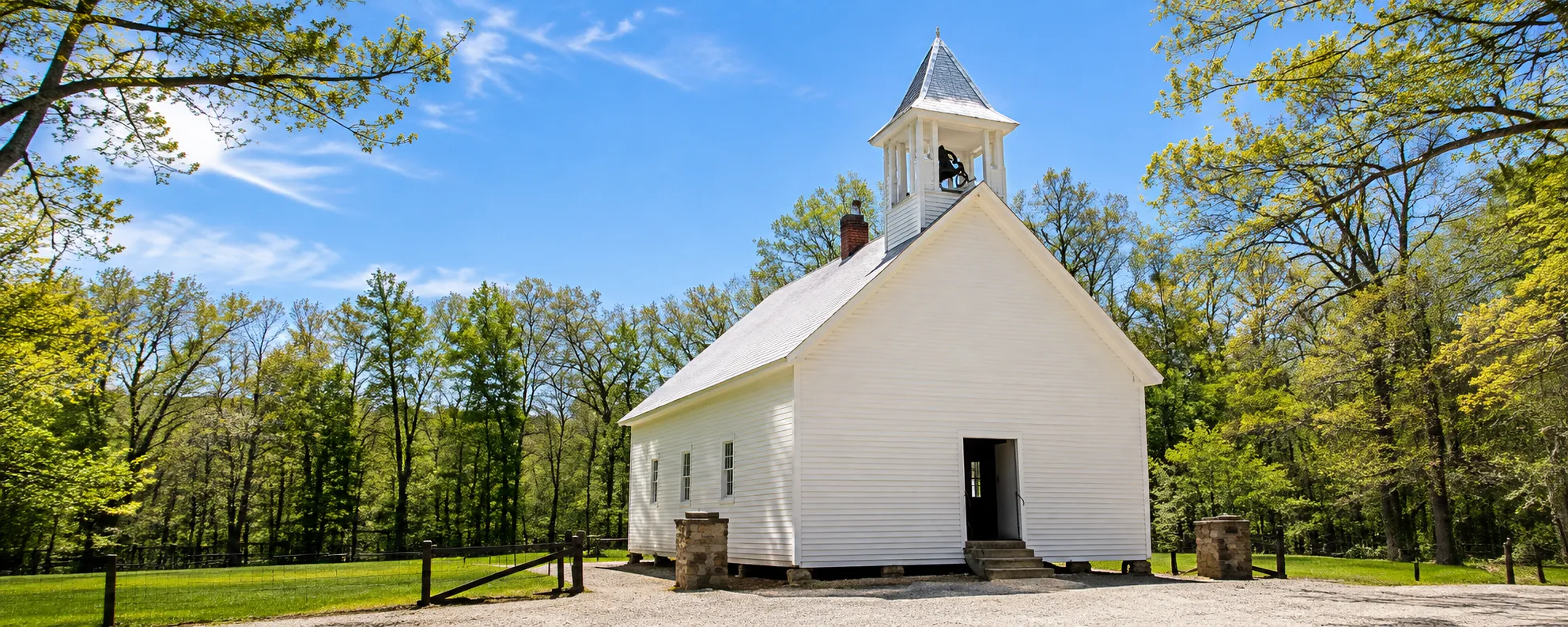
Listen before you enter
Each part plays on its own. Start with the first, then choose the ones you want. Nothing plays until you press play.
-
1Introduction and history
8 min 13 s · 5.9 MB
Download MP3: Primitive Baptist Church, Introduction and history
Read the transcript
We must first get a little bit of the history before we even talk of this particular building.
In the early years, we mentioned John Oliver coming in in 1818. The Tiptons followed in 1819, as did a handful of others. And these folks who were living in Cades Cove, they would meet at the various homes, and they would have a Bible study. Someone who could read and read well, they would kind of lead this service.
John Oliver was very instrumental, as was another man by the name of Peter Cable.
After about five or six years of working in the homes of people, they said, “We need to belong to a church. We need to affiliate with the church.”
So sure enough, in 1826, they sent a letter to what was called Blair's Cove. Today, it's East Miller's Cove and West Miller's Cove because we have a road going right through Miller's Cove. And that was an established community about 20 miles from Cades Cove.
That was in 1826. No answer was received from the Baptist Church from Miller's Cove. So come 1827, they sent a letter again over into what was known as Wears Valley or Wears Cove, to a Baptist church there. They responded, “Yes, you can become a part of the Wears Cove church.”
So the first few years of the Baptist church that we're talking about, which is what it was, because it was a Baptist church, not the Primitive as of yet, but the Wears Cove Baptist Church in Cades Cove. That was the title of the church.
So a number of years went by calling it Wears Cove Baptist Church in Cades Cove, and that you can see on the church minutes.
Well, by 1831, a man by the name of Tipton, one of the Tipton families, he donated an acre and a half of land where the church now sits and the cemetery. And so that's where they built their first log cabin church.
Again, it's not the building that we have today. It was the log church. There is some speculation as to maybe there were two log churches. When the first one was little, they had to build a bigger one because more people moved into Cades Cove.
By 1850, there were 700 people living in Cades Cove. Many were Baptist, and they came to that little church, that log church.
It wasn't until 1887, when they had the sawmills brought into Cades Cove, which were called portable sawmills because they could transport those and they were steam-driven. That's when they erected this particular church in 1887.
There was a strong windstorm that came up, toppled many of the trees, particularly the pine trees, and that was an easy wood for them to saw.
This building, the interior is made out of pine or fir trees. The exterior was poplar, and that they shaped to be uniform boards.
On the inside of the church, the pine is just planks that were uniformly laid in a pattern. But if you look at them, one might be five inches. So you could feel those walls and feel the different boards. Some might be five inches, some might be seven inches, three inches, because they utilized everything. They didn't throw away anything.
When I say uniform, it means square, but it was not like the exterior where every board is the same size.
They did have the bell in the church. That's very important to the community and very important for many things, not just a call to worship.
Also, this church is set up on the stones, very large rocks, and that kind of served as a foundation.
But it's also, I mentioned this has always been a progressive community, and sure enough, come about the early 1920s, maybe late 1920s, they started jacking the churches up and putting cinder blocks underneath them.
When the park took over the churches throughout, especially the Primitive Baptist, which is a good example, the park decided, “We're going to show the visitor to the park what this church looked like when it was made in 1887.”
So they jacked that church back up, took the cinder blocks out, found some similar rocks, and that became then the look that we have today on the rocks.
Occasionally, the park has to come back in and redo some of these rocks as they settle into the ground to keep that floor very, very flat.
But back to the outside of the church. If you can look on the left side, there's a column indicating when the church was built, and it said it was founded in 1827. But it doesn't say this building was built in 1887. It says founded. That again goes back to when they got their charter as a Baptist church.
On the left side, it's honoring John Oliver. On the right side is a man named Peter Cable, who is another prominent citizen.
This church became the most prominent church, was the largest church. Some of the community leaders attended this church, so a lot of decisions were made as a congregation that affected the entire Cove.
Sometimes there were 250 people in the Cove. Other years, it had grown. Their census tells us that there were up to 700 people. So this was a large...
The John Oliver cabin that we had mentioned before, it's maybe one of the oldest cabins. Some of the other cabins are not as old as that. They were built in the 1880s, 1860s, and so forth.
But this is a wonderful, wonderful place.
And this church also, there was a split. And I don't want to go into too much about this split, but it had to do with the situation where, what is the purpose of our church? Are we to become missionaries? Are we to support mission work? Or are we just to exhibit a Christian life?
So there was a split, and that split came in 1839. So think of that date. That's when this Baptist church became a Primitive Baptist church.
Missionary Baptists then, who believed in missions and supporting them, they would actually use this same church but at different hours because they all believed in the same God and in Jesus dying and going to heaven. So they used the same church.
They were also a community that was open to even the Mormons coming in. Now, the Mormons that came in, they were allowed to live, and they could too worship at a different hour or a different time in that particular church.
So it was very open.
Now, it cannot be said what was the feeling of the people here in the mountains towards those of the Catholic faith. That's another thing for study to go into.
But they were open and allowed the Mormons. They would not have allowed a man to have more than one wife. That was not recognized, however.
-
2The benches
59 s · 0.7 MB
-
3The sin chair
The seat where a member sat to confess their sins.
53 s · 0.7 MB
-
4Shape note
1 min 30 s · 1.1 MB
-
5The handprints
1 min 41 s · 1.2 MB
Transcripts for the other sections are on the way.
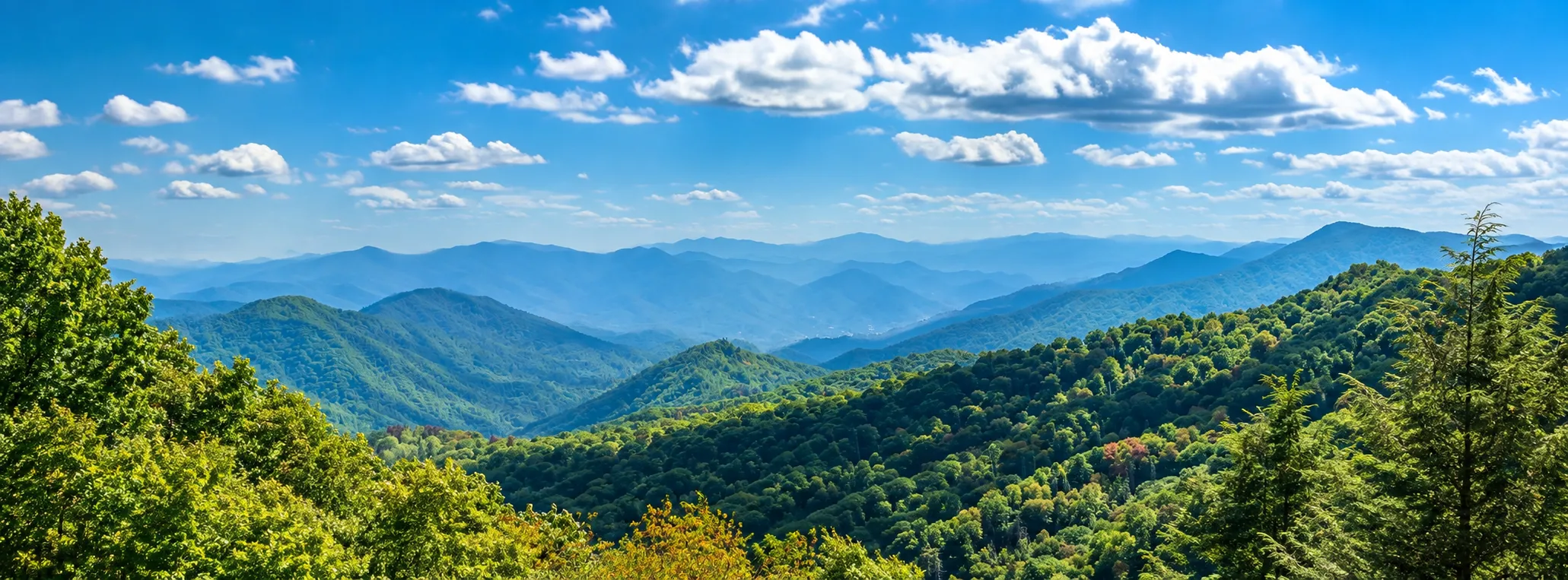
Listen before you enter
Narration for this stop. Nothing plays until you press play.
-
1The Overlook
4 min 45 s · 3.4 MB
A written transcript of this narration is on the way.
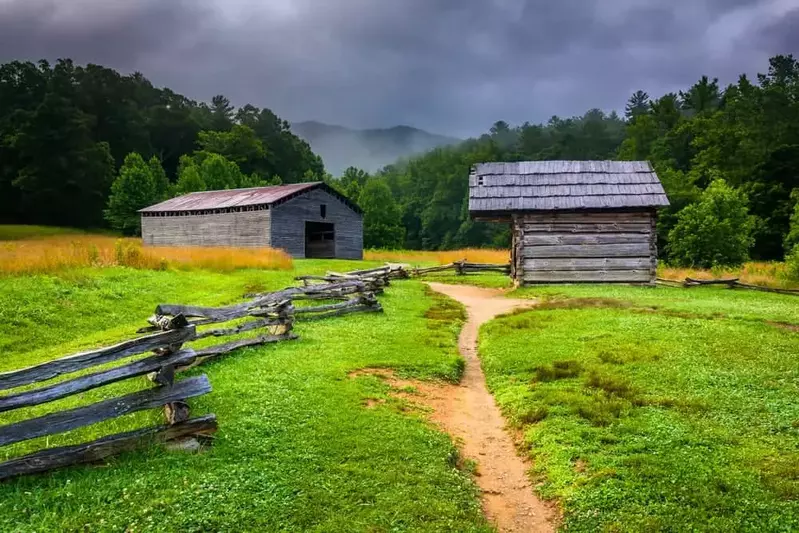
Listen before you enter
Narration for this stop. Nothing plays until you press play.
-
1The Cable Mill area
7 min 28 s · 5.4 MB
A written transcript of this narration is on the way.
With support from
The bus tours that make this research possible
Participants ride into Cades Cove on tours hosted by the Great Smoky Mountains Heritage Center in Townsend, then tell us what worked and what didn't. The research does not happen without them.

More doors to open
More places than there is funding
Every experience on this page began with a trip, a tripod, and someone willing to tell the story of a place. Help us reach the next one, or bring us a site that deserves to be experienced by more people.