Home About
About HeritageWays
We're not guessing. We're asking.
HeritageWays builds accessible cultural heritage experiences, and builds them with the people they are meant to serve rather than on their behalf. That distinction is the whole organization.
Why we exist
Heritage should be within reach of everyone who wants it
Our mission
To remove barriers to cultural heritage by creating immersive, accessible virtual experiences that are designed, tested and shaped by people with disabilities, so that historic places and the stories they hold are available to everyone, wherever they are and however they experience the world.
Our vision
A standard for accessible cultural heritage: where virtual access is built into how cultural sites are documented and shared, not added afterward, and where a person's mobility, sight, hearing, age, distance or income no longer decides which parts of our shared history they get to know.
The problem
Built before anyone asked who could get in
A cabin door cut in 1830. A staircase with no rail. A trail that climbs for two miles. A collection room reachable only by a narrow stair. None of it was designed to exclude anyone. It simply wasn't designed with everyone in mind.
Retrofitting a two-hundred-year-old structure is often impossible without destroying the thing that makes it worth visiting. So the barrier stays, and the people it stops stay outside. Not because their interest is lower, but because the building is older than the question.
HeritageWays works on the other side of that problem. If the building can't change, the way in can.
How we think about access
Two frameworks do the heavy lifting
Neither of these is decoration on a grant application. They determine what actually gets built, and what gets thrown out.
The Social Model of Disability
The older way of thinking locates disability in a person's body: this visitor cannot climb the stairs.
The Social Model relocates it to the environment: this building has no way in other than stairs. The person hasn't changed. The problem has moved to where it can actually be solved.
That shift is why HeritageWays doesn't describe its audience by their limitations. The barrier is the subject, not the person meeting it.
Universal Design for Learning
UDL starts from a plain observation: people take in information differently, and a single fixed presentation will always fail somebody.
So an experience offers more than one route to the same understanding: see it, hear it described, read the transcript, move through it yourself, or any combination.
Built this way, an accessible tour isn't a reduced version for a narrow audience. It's a better experience for everyone who opens it.
The research
Built in three phases
The research project, a 360° inclusive and accessible virtual tour of the Walker Sisters Place in the Great Smoky Mountains, is structured so that people with disabilities shape the work at every stage, not just react to a finished product. Qualitative and quantitative measures run across all three phases so the results can actually be compared.
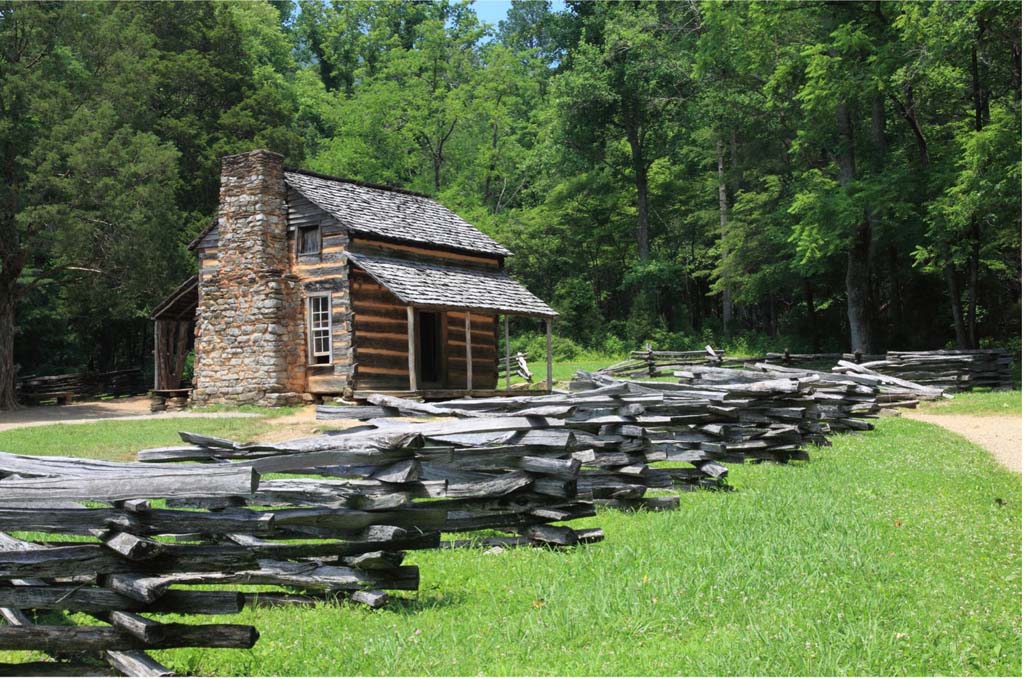
Beyond the research tour, the National Park Service has granted a permit covering Cades Cove, the John Oliver Cabin, the Primitive Baptist Church and other churches, and the Cable Mill area. Cades Cove is listed on the National Register of Historic Places, inside a park that is both a UNESCO World Heritage Site and an International Biosphere Reserve.
The aim is stated plainly: to set the standard for inclusive heritage experience. The work is tied to Article 27 of the Universal Declaration of Human Rights, which holds that everyone has the right to take part in cultural life, and to United Nations Sustainable Development Goals 4 and 10, on quality education and reduced inequalities.
Listen
Identify the barriers that exist in heritage spaces by asking the people who encounter them, not by surveying the building. Survey instruments designed for museums and cultural arts experiences are tested against real heritage sites to find out whether they measure anything useful.
Build
Document the site in 360° photography, gather oral histories from descendants of the people who lived there, and construct the experience with audio description, captions, keyboard navigation, adjustable visuals and a downloadable option, working with the National Park Service and other heritage organizations.
Test, and change what doesn't work
Persons with disabilities, including people who are blind and people with visual or motor skill disabilities, test the experience directly for accessibility, usability and inclusivity. Their feedback decides what changes. Anything that does not work for them gets rebuilt, and nothing is called finished simply because the people who made it were happy with it.
Current research · Phase 3
Take the 360-degree virtual tour survey
Phase 3 of the research is open. The survey is run through the University of Birmingham, UK, and the research tour is part of it, so please start from the survey link rather than looking for the tour on its own. Your answers decide what the next version of the tour does differently.
360-degree Virtual Tour Survey, University of Birmingham UK. Please share it with anyone who might take part.
We're not guessing. We're co-creating a tour that reflects the needs and preferences of the people it's meant to serve.
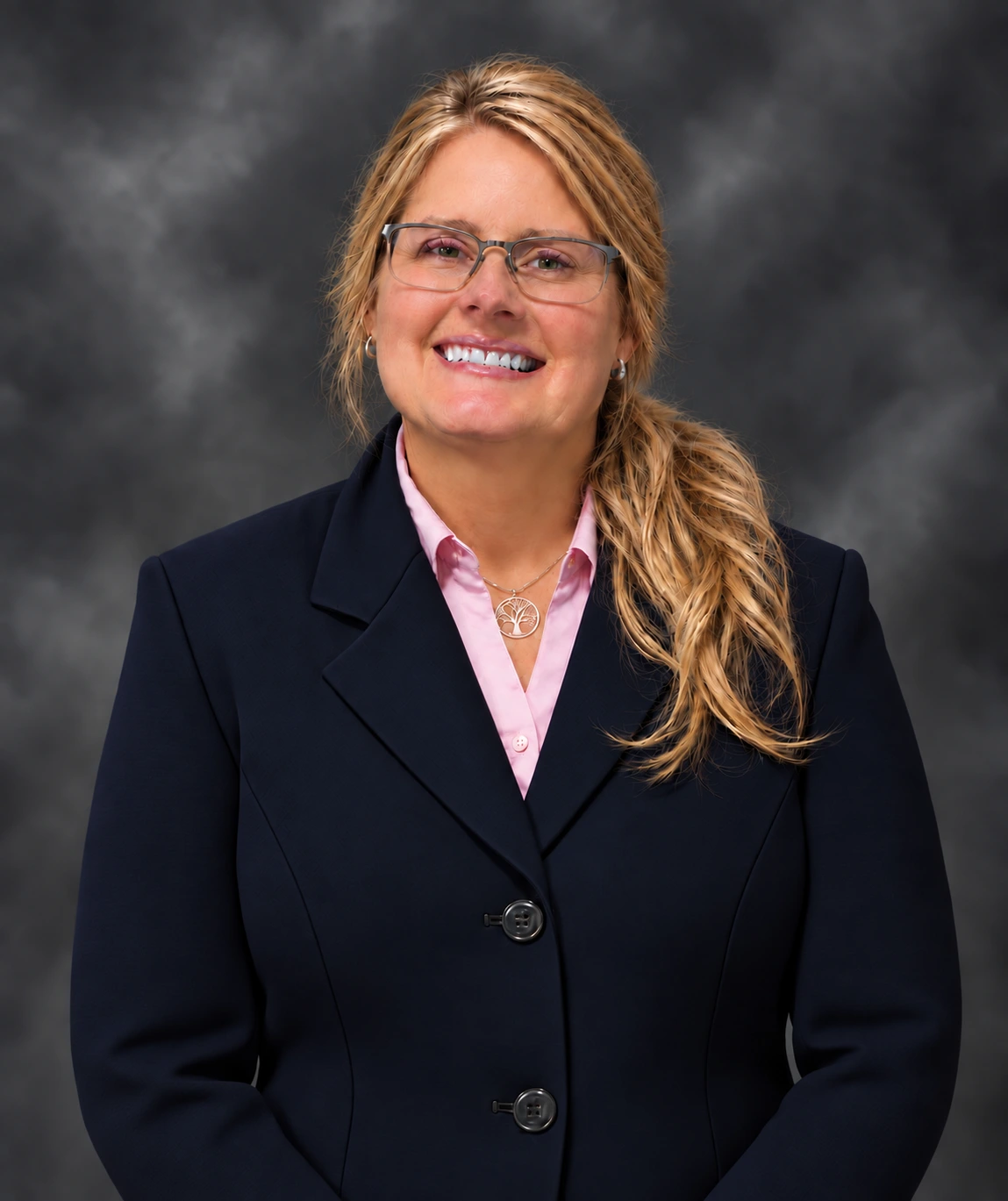
Lorna Keathley, Founder of HeritageWays
The founder
Lorna Keathley
HeritageWays began with a question Lorna kept running into on site. It is one that a career spent between museums, classrooms and cameras had left her unusually equipped to answer.
From 2015 to 2026 she was Associate Museum Curator for Visitor Experience at the Great Smoky Mountains Heritage Center, where the work ran from grant writing and curatorial research to building immersive virtual exhibits and photographing structures and artifacts in situ. She continues to volunteer there.
Before that came twenty-five years at the University of Tennessee, Knoxville: first doing communication and design for the Center for Transportation Research, then as a Public Speaking Lecturer, working with students who had high communication apprehension. She retired early from UT in fall 2021.
Since 2020 she has also been a Heritage and Museum part-time lecturer at Johns Hopkins University, teaching in the Cultural Heritage Management and Museum Studies programs. Both roles are about how knowledge reaches people, and both reflect her long-term interest in persons with disabilities.
How do we use technology to create equitable access to the places and stories that connect us?
The question did not come from a seminar. In the last two years of her mother's life, lung cancer put her in a wheelchair, and the places the two of them had always gone together in the Smokies stopped being places they could go. Trips that had been ordinary became a series of thresholds, gravel paths and flights of steps. Lorna has said she was opened up to a world of barriers she had never had to notice before.
Her doctoral research at the University of Birmingham turns that question over to the people it affects. It has taken her into 360° photography, oral history work with descendants of the families who lived in these mountains, survey design, and long conversations with disability organizations across East Tennessee about what access actually means to the people who need it.
She went back to school at 56 to do it, after twenty-five years at the University of Tennessee.
Her two master's degrees were deliberate. An M.S. in Communication Studies and an M.A. in Cultural Heritage Management put one foot in the sciences and one in the arts, and her Ph.D. joins the two, building on mass communication theory and heritage theory.
One instinct runs through all of it, from the studio art degree to the communication research to the museum work to the classroom: figure out what a person actually needs in order to understand something, then build that, rather than building what's convenient and hoping it lands.
The record
Credentials, and what they were for
Education
- Ph.D., History and Cultural StudiesUniversity of Birmingham, United Kingdom · in progress2027
- M.A., Cultural Heritage ManagementJohns Hopkins University2019
- M.S., Communication StudiesUniversity of Tennessee · summa cum laude2012
- B.A., Studio Art, minor in ItalianUniversity of Tennessee · summa cum laude2007
- Collections Preservation Center internshipGreat Smoky Mountains National Park2019
Experience
- Associate Museum Curator, Visitor ExperienceGreat Smoky Mountains Heritage Center, Townsend, TN2015–2026
- Heritage and Museum Part-time LecturerJohns Hopkins University · Cultural Heritage Management and Museum Studies2020 –
- Public Speaking Lecturer, Communication StudiesUniversity of Tennessee, Knoxville · retired early, fall 20212012–21
- Communication Coordinator & Graphic ArtistUT Center for Transportation Research1998–2012
Recognition
- Greystone Award, Knox HeritageFor the Great Smoky Mountains Heritage Center2023
- Master's thesis downloaded 19,000+ timesUniversity of Tennessee2022
- Rotarian of the YearRotary Club of Bearden · President, 2025–262024
Also: Cherokee Historical Intensive, coursework in Universal Design for Learning, tribal sovereignty training through the National Museum of the American Indian, and the World Heritage UK conference. Member of the American Alliance of Museums, the National Communication Association, and a lifetime member of the Cades Cove Preservation Association.
In the press
Other people telling it
Two East Tennessee outlets have covered the research and the reasons behind it.
The Daily Times · Maryville
Listening to the voices: Ph.D. student working on accessibility for those with disabilities
On the origin of the project, the National Park Service permit covering Cades Cove, and the call for roughly twenty participants with disabilities to ride the Heritage Center bus tour and say what a virtual alternative would need to do.
Knox TN Today
Meet Lorna Keathley: A life journey making an impact
Susan Espiritu, April 2026. On the path from studio art and communication research to cultural heritage, the pull toward open-access publishing, and why small heritage sites are the ones she wants this work to reach.
I want their words to say what they need.
Lorna Keathley, on why the research is built around participants rather than about them.
Who we work with
Accessible cultural heritage takes collaboration
A virtual tour needs permission, local knowledge, historical accuracy and honest feedback. No single organization holds all four.
Heritage institutions
The National Park Service, the Great Smoky Mountains Heritage Center, museums, historical societies and preservation organizations: the people who hold the sites, the collections and the records.
Disability organizations
Advocacy groups, low-vision and blindness services, and technology-access programs across East Tennessee, who connect us with participants and tell us plainly what isn't working.
Descendant families
The people whose families lived in these places, whose oral histories keep a virtual tour from becoming a pretty picture with nobody in it.
What's next
The research is underway
Every site documented, every hour of audio description written, every testing session run with a participant costs something. If this is work you want to see exist, there are several ways to help make it.